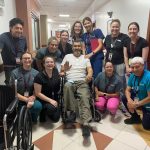
It is difficult to fully appreciate the discomfort and hardship experienced by many of the people True North Missions has the privilege of helping. Edwin’s story illustrates how a medical condition can affect not only an individual’s health and mobility, but also their family, livelihood and overall quality of life.
Edwin is a 48-year-old mechanic who, because of severe hip arthritis, had been unable to work for three years. His condition caused considerable pain, a pronounced limp and a significant difference in the length of his legs. More importantly, it prevented him from earning a living and supporting his family.
Being unable to work for an extended period carries a considerable psychological burden. Financial pressures accumulate, independence is diminished, and the effects are felt throughout the household. Everyday activities become more difficult, and even ordinary routines can become a struggle.
Without the financial resources to pay for a hip replacement, Edwin had little prospect of improving his circumstances. The effects of his condition extended beyond his own physical discomfort, placing additional pressure on both his immediate and extended family.
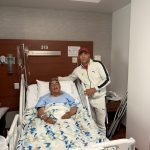
Following an examination by True North Missions, Edwin was selected for hip replacement surgery. This represented an important opportunity: the prospect of returning to work, supporting his family and regaining a degree of independence that had been absent from his life for three years.
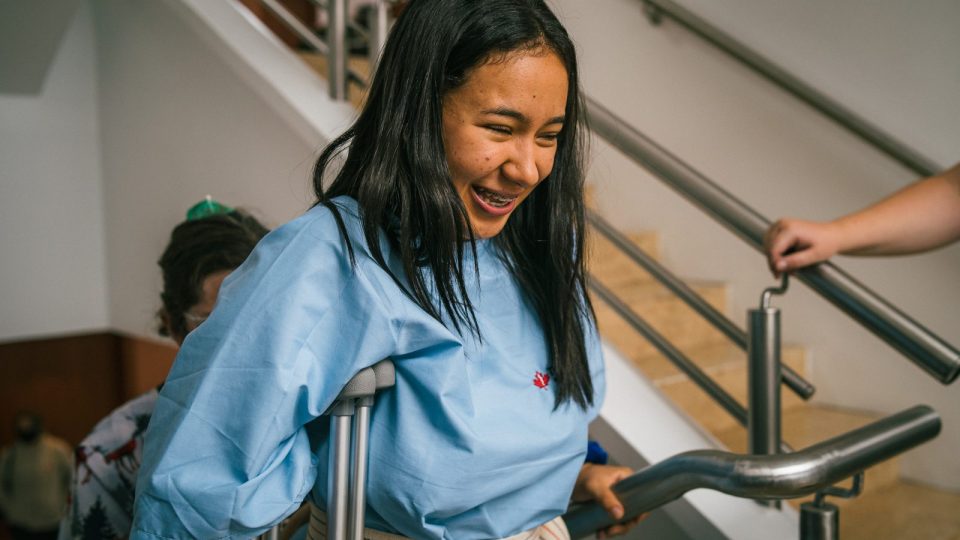
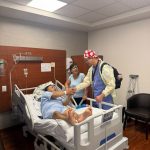
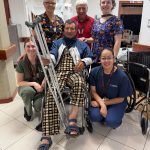
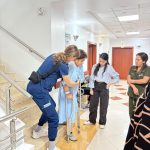
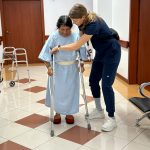
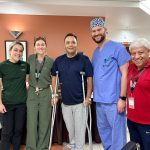
The benefits of surgery became particularly evident during rehabilitation. Our physiotherapy team has the opportunity to work with every patient operated on by True North Missions. In the days following surgery, they guide patients through the recovery process, explain appropriate exercises and help family members understand how they can support rehabilitation at home.
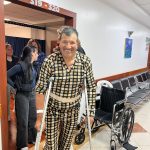
During one physiotherapy session, Edwin stood up to practice walking and realized that, following surgery, his legs were now the same length. He paused for a while, looking away as he took in what had happened. Noticing his silence and the emotion in his eyes, one of the physiotherapists asked what he was thinking.
Edwin explained that he was simply very happy. After years of living with pain and an uneven stride, he was beginning to appreciate what it might mean to walk normally again.
Experiences like this are not unusual for our team, although each patient’s circumstances and response are unique. They offer a valuable reminder of the difference that access to appropriate medical care can make. We are grateful for the opportunity to be involved in these journeys, and moments like Edwin’s give everyone involved reason to reflect on the value of their contribution.
A successful operation is about more than correcting a medical condition. It can restore mobility, create an opportunity to return to employment, ease the burden on a family and help avoid some of the financial and social difficulties that prolonged illness can bring.
Edwin’s recovery is ongoing, and there is still work ahead as he continues his rehabilitation. However, he now has an opportunity that was previously beyond his reach.
We are grateful to the donors, volunteers, medical professionals and partner organizations whose collective contributions make these opportunities possible. Edwin’s story is a reminder of why we do this work and of the importance of providing access to care for people who might otherwise have no realistic alternative.
Ian